Utopian Communities Today: Where Are They Now?
Utopian communities have long been a dream for those seeking a better way of life. From the early experiments at Brook Farm and Oneida in the 19th century to more recent attempts like the Farm in Tennessee and the Twin Oaks Community in Virginia, these communities have aimed to create a society based on shared values, cooperation, and equality.
But where are these utopian communities today? Have they succeeded in creating their ideal societies, or have they fallen short of their lofty goals?
One of the most famous utopian communities, the Farm in Tennessee, was founded in 1971 by Stephen Gaskin and a group of like-minded individuals. The Farm aimed to create a sustainable, eco-friendly community based on principles of nonviolence, cooperation, and spiritual growth. At its peak, the Farm was home to over 1,500 people and was seen as a model for sustainable living.
However, in the 1980s, the Farm faced financial difficulties and had to downsize significantly. Today, the community is much smaller, with around 200 residents. While the Farm still exists and continues to promote sustainable living and social justice, it has not achieved the widespread success and influence that its founders had hoped for.
Similarly, the Twin Oaks Community in Virginia, founded in 1967, has faced its own challenges in recent years. Twin Oaks is an intentional community based on principles of nonviolence, egalitarianism, and sustainability. However, like many utopian communities, Twin Oaks has struggled to maintain its ideals in the face of external pressures and internal conflicts.
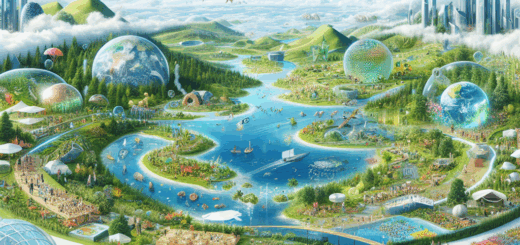
Despite these challenges, there are still utopian communities thriving today. The intentional community movement continues to grow, with new communities forming around the world. From ecovillages and co-housing communities to intentional communities based on specific religious or spiritual beliefs, there are many examples of people coming together to create alternative ways of living.
One such example is the Dancing Rabbit Ecovillage in Missouri, founded in 1997. Dancing Rabbit is a sustainable community focused on ecological living, social justice, and personal growth. The community has grown steadily over the years and has become a model for sustainable living and community building.
In conclusion, while many utopian communities have faced challenges and setbacks, there are still examples of successful and thriving intentional communities today. These communities continue to inspire and challenge us to imagine new ways of living and working together. As we look to the future, it is clear that the dream of utopia is still alive and well.