Parallel Universes: Theoretical Physics’ Most Intriguing Concept
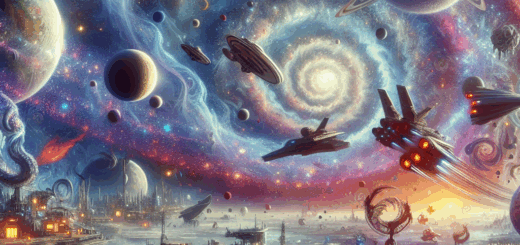
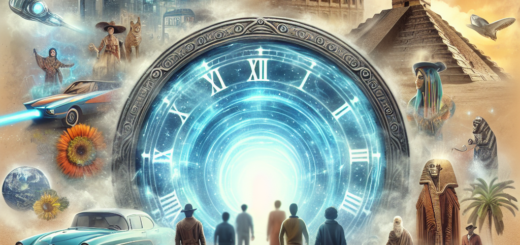
Parallel universes, also known as alternate realities or multiverses, are a concept that has captivated the imaginations of scientists, philosophers, and science fiction writers for decades. The idea that there could be multiple universes, each with its own set of physical laws and constants, has profound implications for our understanding of the universe and our place in it.
The concept of parallel universes originated in the field of theoretical physics, specifically in the study of quantum mechanics and cosmology. In quantum mechanics, the theory of parallel universes arises from the idea that particles can exist in multiple states simultaneously until they are observed, at which point they collapse into a single state. This phenomenon, known as superposition, suggests that there could be an infinite number of parallel universes, each representing a different outcome of a quantum event.
In cosmology, the concept of parallel universes is tied to the idea of the multiverse, which posits that our universe is just one of many universes that exist in a vast, interconnected system. According to this theory, each universe in the multiverse has its own set of physical laws and constants, which may be different from those of our own universe. This could explain why the universe appears to be finely tuned for the existence of life, as there could be an infinite number of universes with different properties, only a few of which are capable of supporting life as we know it.
One of the most intriguing aspects of parallel universes is the possibility that there could be alternate versions of ourselves living in these other universes. This idea, known as the many-worlds interpretation, suggests that every possible outcome of every decision we make is realized in a parallel universe, leading to an infinite number of different versions of ourselves living out different lives.
While the concept of parallel universes remains speculative and unproven, it has inspired a wealth of scientific research and speculation. Some physicists believe that the existence of parallel universes could help to explain the mysteries of quantum mechanics and cosmology, such as the nature of dark matter and dark energy, the origin of the universe, and the existence of black holes.
Despite the lack of empirical evidence for parallel universes, the concept continues to be a source of fascination and debate among scientists and the general public. Whether parallel universes are a real phenomenon or simply a theoretical construct, they provide a tantalizing glimpse into the mysteries of the universe and the possibilities of what lies beyond our own reality.