Best Outer Space Videos Blog
The frequent occurrence of supernova explosions in the Milky Way happens regularly. Their blasts, when at its maximum, can outshine our entire galaxy. There is an evidence that ancient supernova explodes near Earth. It...
Twenty light years from our planet, the Earthlike planet – Gliese 581, are orbiting around its own Sun. The orbiting distance brings the ideal conditions for life existance on this planet. Gliese 581 has...
A long ago, astronomers grouped the Milky Way, our galaxy, in the Virgo Supercluster. This supercluster covers around 100 galaxy groups. Meanwhile, in a fascinating new study, a team of scientists, led by R....
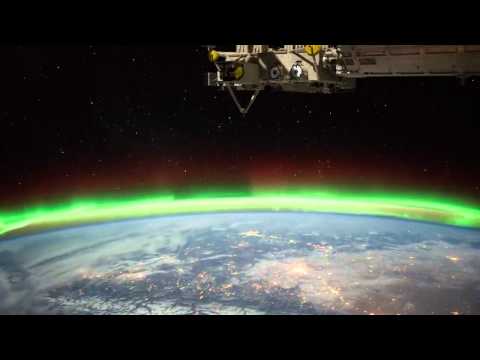
International Space Station recorded with their special 4k-camera the night on Earth. The documentary shows the amazing view from the space, unfolding the spectacular nightly appearance of world’s famous regions and cities, such as:...
After 37 years, Voyager continues its mission into stellar space. Leaving the Solar System, Voyager becomes the farthest thing we have sent everywhere. Our Earth’s ambassador makes amazing accomplishment. In the past, it was...
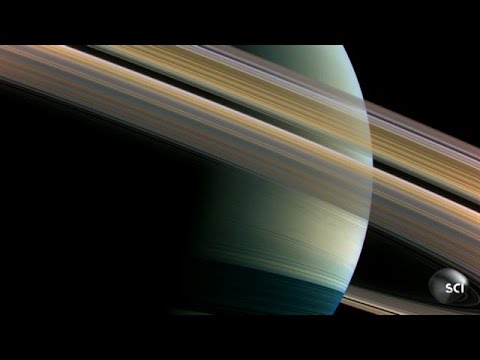
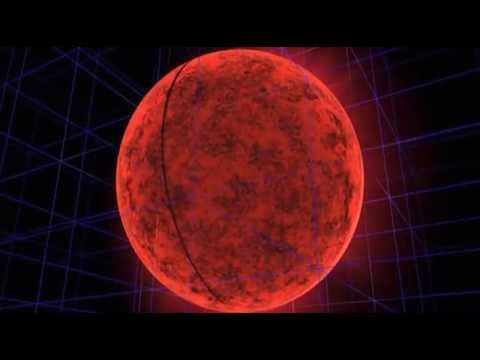
Saturn’s huge solid core is about ten to twenty times bigger than Earth. Its temperature is extremely high – 21.000 degrees. Comparing to the Sun, it is twice the temperature of its surface. This...
An explanation on the differences between these heavenly bodies. Asteroids are usually made from space debris like rock, although some are comprised of nickel or iron. Comets are essentially space’s equivalent to snowballs. Unlike...
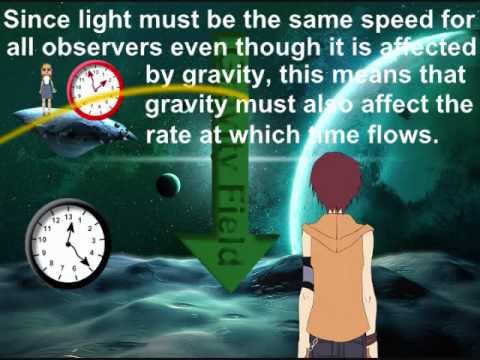
Everyone has heard of E=mc² but what does it actually mean? Here is an easy to understand animation explaining all of Einstein’s Theory. Covers both Special Relativity and General Relativity.
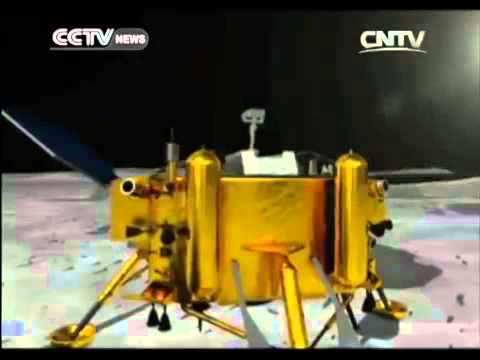
A pre-cursor to any manned mission to the Moon is to be able to return an unmanned lunar probe back to Earth As its next step in space exploration, China is preparing an orbiter for...
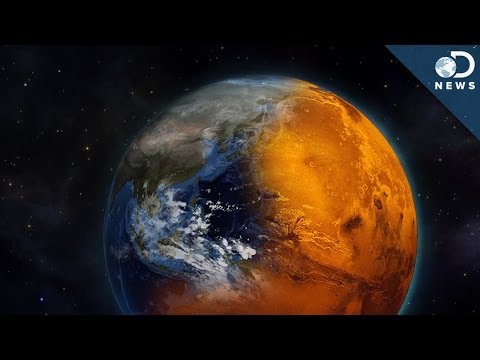
One day, it might be possible to live on Mars without a spacesuit! How could this be possible? Here an explanation on how this could be possible and the process of terraforming Mars in order...
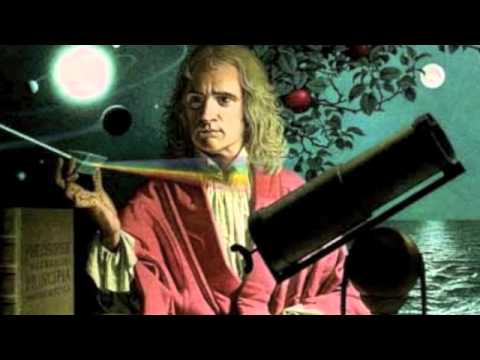
Sir Isaac Newton (4 January 1643 — 31 March 1727)was an English physicist, mathematician, astronomer, natural philosopher, alchemist, and theologian, and is considered by many scholars and members of the general public to be...
What can we learn from the Rosetta adventure? Composed of an orbiter and lander, Rosetta’s objectives since arriving at comet 67P/Churyumov-Gerasimenko in August 2014 are to study the celestial object up close in unprecedented detail,...
If Aliens exist where do they live and how do they live? Scientists say a world that’s 490 light-years away qualifies as the first confirmed Earth-sized exoplanet that could sustain life as we know...
A Soyuz rocket launched Europe’s fifth and six Galileo satellites from Europe’s Spaceport in Kourou, French Guiana on the 22nd August.These new satellites are intended to join four Galileo satellites already in orbit, launched in...
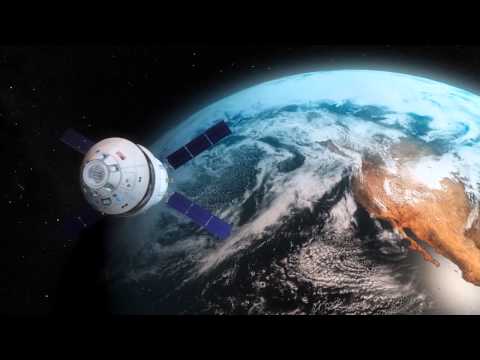
Get an inside look at NASA’s next steps in deep space exploration — from the space station, to an asteroid and on to the human exploration of Mars.
Einstein changed the way we think Before Einstein, people thought that time and space were an unchanging platform where the events of life develop without them changing anything in particular. Einstein taught us about...
The following video is a documentary about truly Monster Black Holes! Check them out if you’re into black holes in general. It’s produced by National Geographic so you’ll clearly learn some interesting info.
Astronomy for Development This video is discussing learning astronomy for development and the special guest is Kevin Govender, from the Office of Astronomy Development.