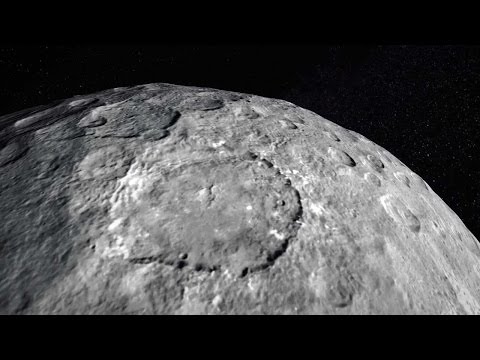
Ceres, Seen from a Distance of 5,700 Km
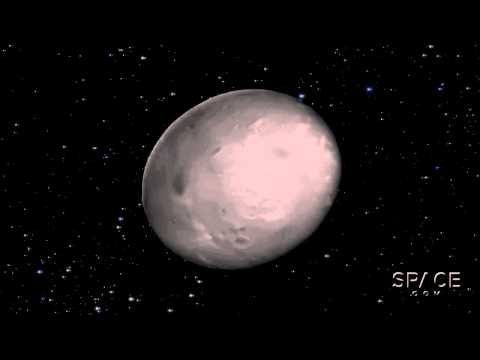
New images of Ceres, the largest body in the asteroid belt, were captured by NASA’s Dawn spacecraft. Scientists used 80 images of Ceres to create this animation. The images, used in this video, are...

New images of Ceres, the largest body in the asteroid belt, were captured by NASA’s Dawn spacecraft. Scientists used 80 images of Ceres to create this animation. The images, used in this video, are...
For scientists, there is no question about terrestrial life; they are sure that alien life exists somewhere in our Universe. They only wonder if there is alien life close to our planet. In this...
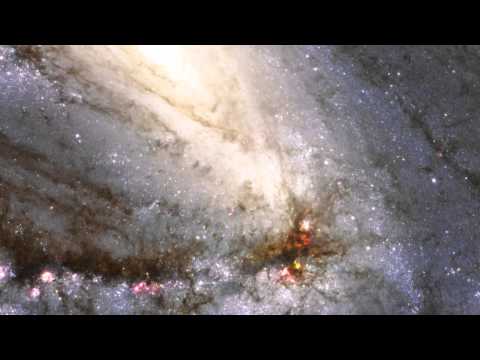
This video shows us a peculiar galaxy, Messier 66, which is a member of the largest triade called the Leo Triplet. Its unusual shape is influenced by the gravitational pull of Messier 65 and...
At the beginning of the month, we can see Saturn very close to the Moon in the early evening. Pluto will also come close to the Moon, but it is still invisible. At the...
The European Space Agency (ESA) has released new images of the Comet 67P/ Churyumov – Gerasimenko, taken by the Rosetta space probe. They depict the area of 4 km wide, full of ice, snow,...
The New Horizons’ probe is nearing its end destination – Pluto – in July, this year. While scientists are wondering what New Horizons will find there, we already have the evidence that shows unusual...
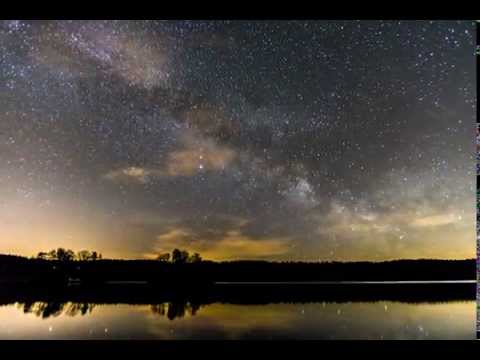
The following time-lapse video represents a selection of images captured from Grubensee, Brandenburg, Germany. These images were taken during beautiful spring nights in April and May, 2015.
In studying exoplanets, NASA’s infrared telescope called the Spitzer Space Telescope (SST) is of enormous importance. Although astronomers have found more than 500 exoplanets, they are still too hard to study because of their...
Although galaxies in our universe are distributed with a lot of vast space between them, from time to time, they come very close to each other and start merging. As a result, they form...
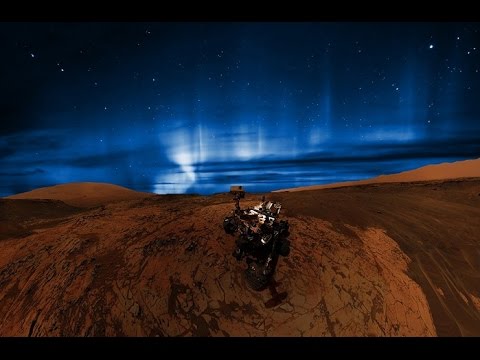
A new study reveals that Mars also has aurora as our planet, which is in the visible range. The southern lights on Mars become brighter and more vivid when the intensity of solar eruptions...
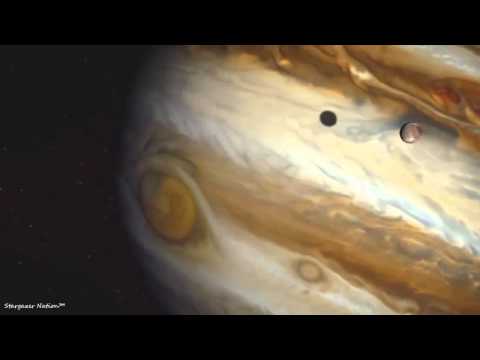
This video leads us on a journey through our Solar System and further. Through sequences of astonishing images and beautiful music in the background, we can explore our Universe and its objects.
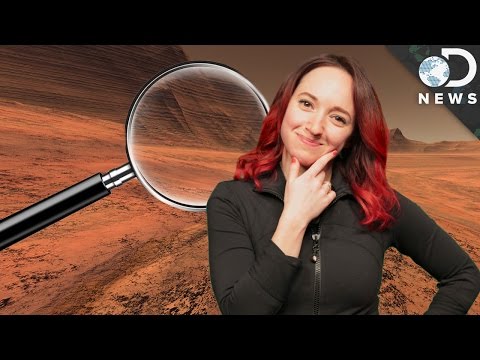
Amy Shira Teitel from DNews explains where on Mars scientists are looking for the signs of extraterrestrial life and why. She speaks about the Gale Crater and NASA’s Mars Curiosity mission, which focuses on...
This video is a monthly guide for every stargazer on a northern hemisphere. It points out at constellations, planets, deep-sky objects and events during the following month. The month begins with Jupiter and Venus...
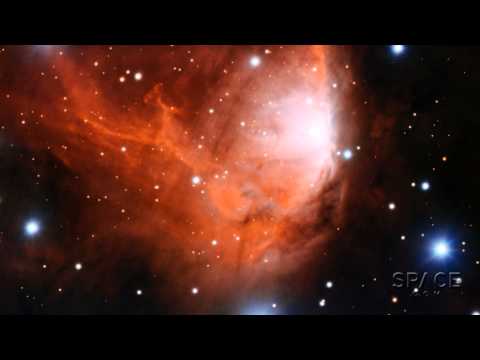
Gum 19 or better known as the two-sided nebula is 22,000 light-years away from our planet, settled in Vela constellation. This breathtaking image is captured by ESO’s Very Large Telescope in Chile.
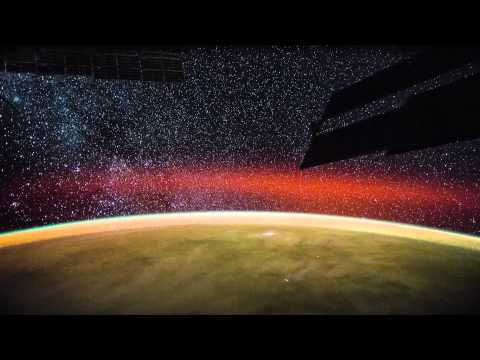
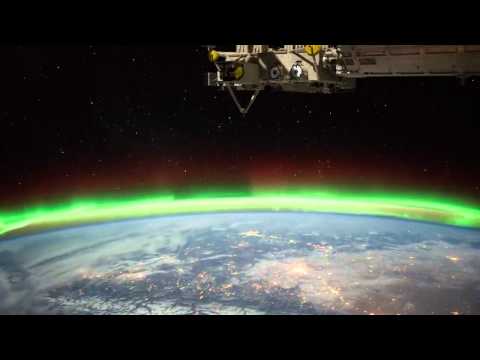
This video shows our night sky from the International Space Station. NASA’s astronaut, Terry Vrits, shares with us this amazing view of the Milky Way.
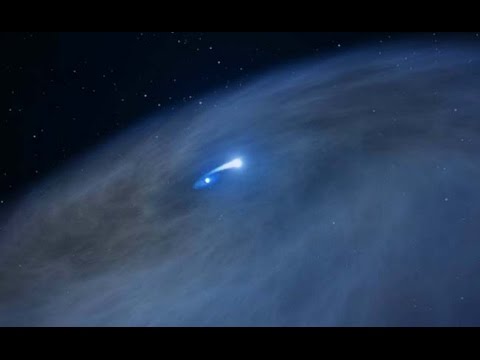
The Hubble Space Telescope has recently discovered a new star that rapidly ages. The star is encircled by a huge disc of gas, which is two trillion miles in its diameter. According to scientists,...
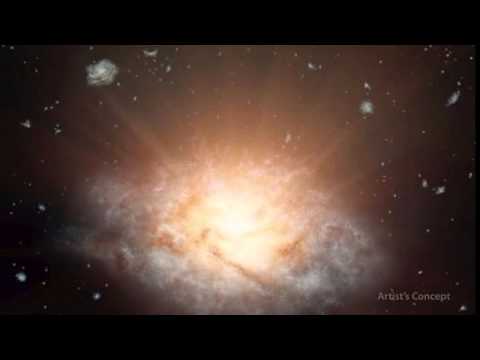
NASA’s Wide-Field Infrared Survey Explorer (WISE) spacecraft has detected the brightest galaxy we have ever known in our Universe. This galaxy is billions of light-years away from us and orbits around the extremely large...
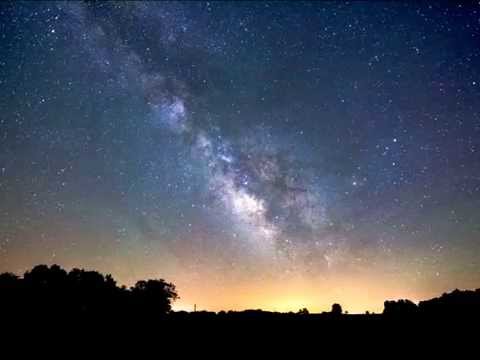
This time-lapse video shows the night sky and the Milky Way near Butler, Missouri on May 18-19th, 2015. A group of astrophotographers from Dark Sky Site Club has captured these beautiful images.


 Space.com: NASA, Space Exploration and Astronomy News RSS Feed