NASA’s Juno Probe Enters Jupiter’s Orbit
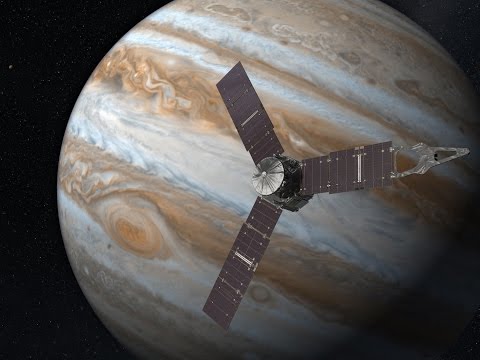
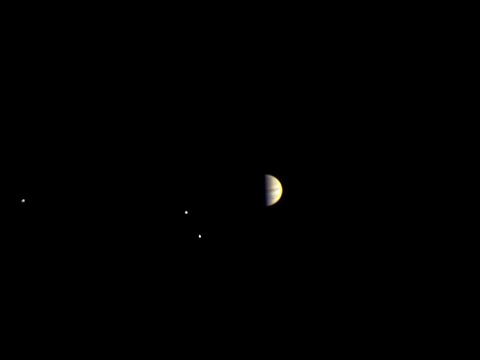
After five years of traveling, NASA’s Juno spacecraft reaches Jupiter’s orbit on Monday, July 4th. Now, scientists expect to find out more about Jupiter’s unique atmosphere, its core, and auroras.

After five years of traveling, NASA’s Juno spacecraft reaches Jupiter’s orbit on Monday, July 4th. Now, scientists expect to find out more about Jupiter’s unique atmosphere, its core, and auroras.
This video contains all interesting facts about the Juno mission to Jupiter that we may want to know. NASA’s Juno spacecraft will arrive at Jupiter on Monday, July 4th.
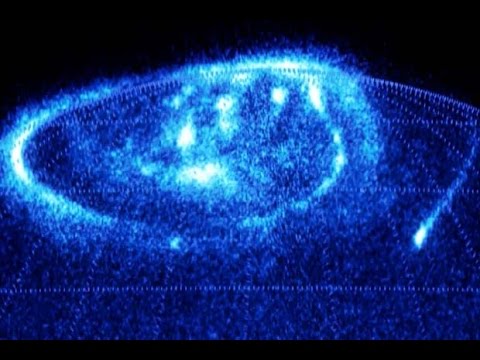
This animated video shows the ultraviolet view of Jupiter’s auroras. The images were captured by the Hubble Space Telescope during one month in 2016.
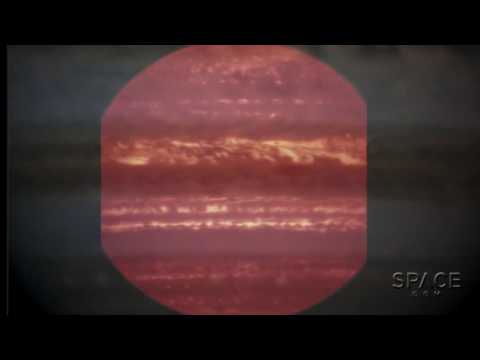
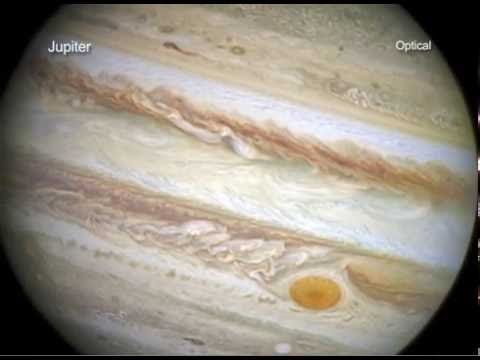
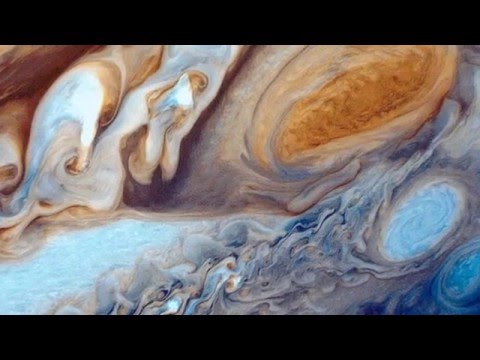
Using the VISIR instrument on the ESO’s Very Large Telescope, scientists have taken a new infrared image of Jupiter that shows turbulence in the planet’s atmosphere.
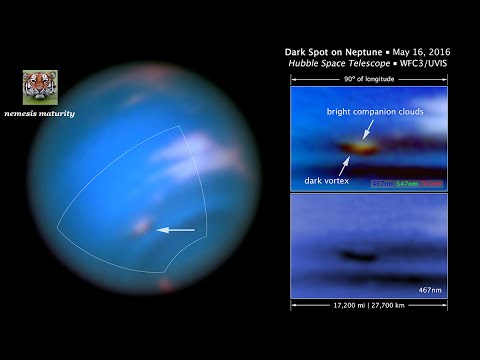
The Hubble Space Telescope captured the new image of Neptune that reveals ‘dark vortex’ on its atmosphere. Namely, scientists confirm that the Neptune’s dark spot is, in fact, a huge gas mountain that appears...
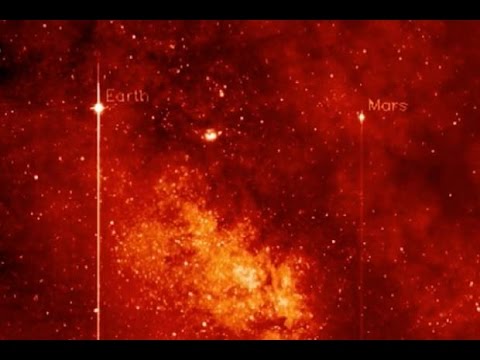
This time-lapse video is created from data sent by the NASA’s Solar Terrestrial Relations Observatory Ahead (STEREO-A) spacecraft. The video shows a stereoscopic view of the Earth, Mars, Pluto and the Milky Way.
This video shows us what influences the climate of Venus. Namely, scientists consider Venus’ electric field responsible for its dry atmosphere. According to them, its electric field is 5 to10 times stronger than Earth’s.
The following video reveals what has happened in the early Solar System and how two largest planets – Saturn and Jupiter – became thus big and occupied the places they still hold today.
Japanese scientists have released a new image of Venus and its clouds, taken by their spacecraft Akatsuki. The image shows the mysterious cloudy world of Venus.
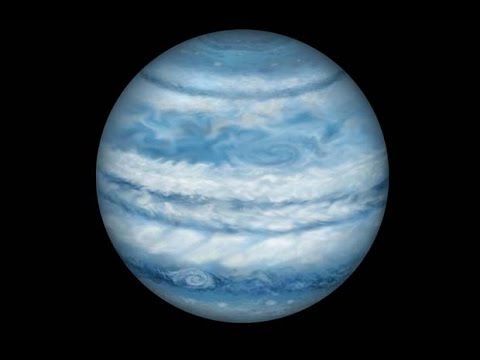
Using data from NASA’s Kepler Space Telescope, scientists have detected a Jupiter-like exoplanet that rotates around two stars. The exoplanet is known as Kepler-1647b; it is 11 times larger than Earth in diameter and...
Using data from Chandra X-ray Observatory, scientists have a better perspective of auroras on Jupiter.
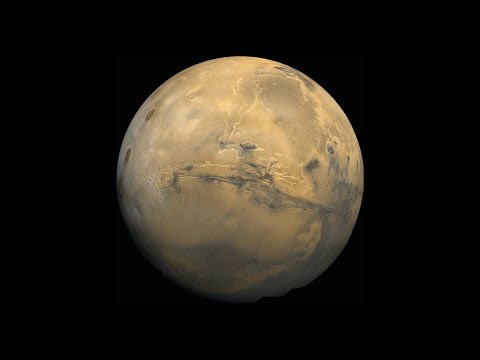
Mars appears to have the biggest canyon in our Solar System. It is called Valles Marineris, which is 3,000 kilometers long and 8 kilometers deep.
In this video, Bill Nye explains NASA’s Juno historical mission to Jupiter. He describes how scientists will use technology to find out more about Jupiter and its internal composition.
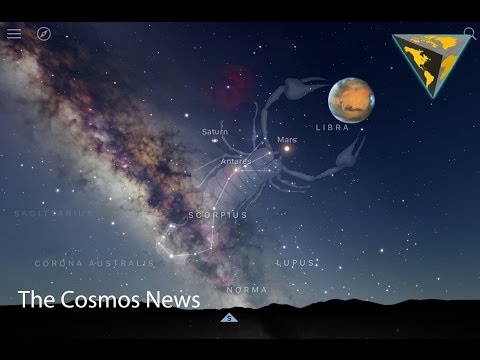
This video shows us how and where to look if we want to see the Red Planet in its closest approach on May 30th.
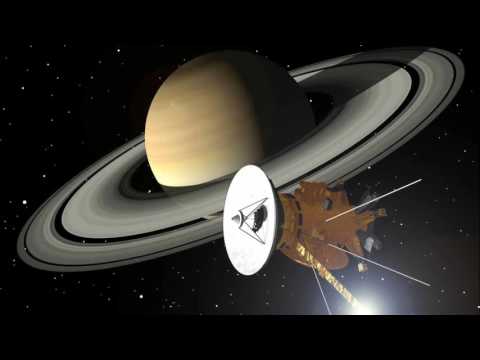
Saturn is one of the most beautiful planets in our Solar System, which fascinates scientists and astronomy fans for years with its mysterious rings. This video gives us the list of 25 most interesting...
NASA’s Juno spacecraft is expected to arrive at Jupiter on July 4th, 2016. Since this bright giant has always been intrigued humans, scientists hope to get answers to many questions regarding its climate, atmosphere,...
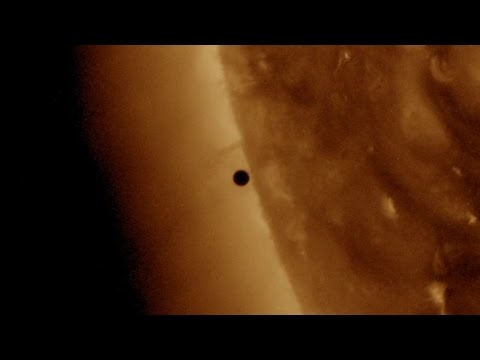
This video shows Mercury while moving across the Sun’s disc on May 9th from Novi Sad, Serbia. It is created by an astrophotographer Aleksandar Vukicevic, who took the images of Mercury in HD resolution.
Today, Mercury is making a transit across the face of our Sun. This rare event that happens 13 times during a century began at 7:12 a.m. ET and will end at 2:42 p.m. ET....



 Space.com: NASA, Space Exploration and Astronomy News RSS Feed